A protein can look great on an SDS-PAGE gel, meet its purity spec, have the right concentration, and still cause problems in a downstream assay.
One reason: endotoxin.
What is endotoxin?
Endotoxin, primarily lipopolysaccharide (LPS), is associated with the outer membrane of Gram-negative bacteria. It doesn’t show up on an SDS-PAGE gel or in routine protein purity or concentration testing. Instead, it requires a separate endotoxin-specific assay, such as Limulus Amebocyte Lysate (LAL) testing.
So, a protein can look perfectly clean on SDS-PAGE and still carry enough endotoxin to cause downstream problems. At Athens Bioscience, we test low-endotoxin products specifically for endotoxin as part of our release criteria.
This matters most for cell-based assays, animal studies, or other applications involving an immune response. Even small amounts of endotoxin can activate cells and add background signal that has nothing to do with the protein itself. What you get is noisy data, activity that shouldn't be there, or results that don't reproduce.
How we keep it low
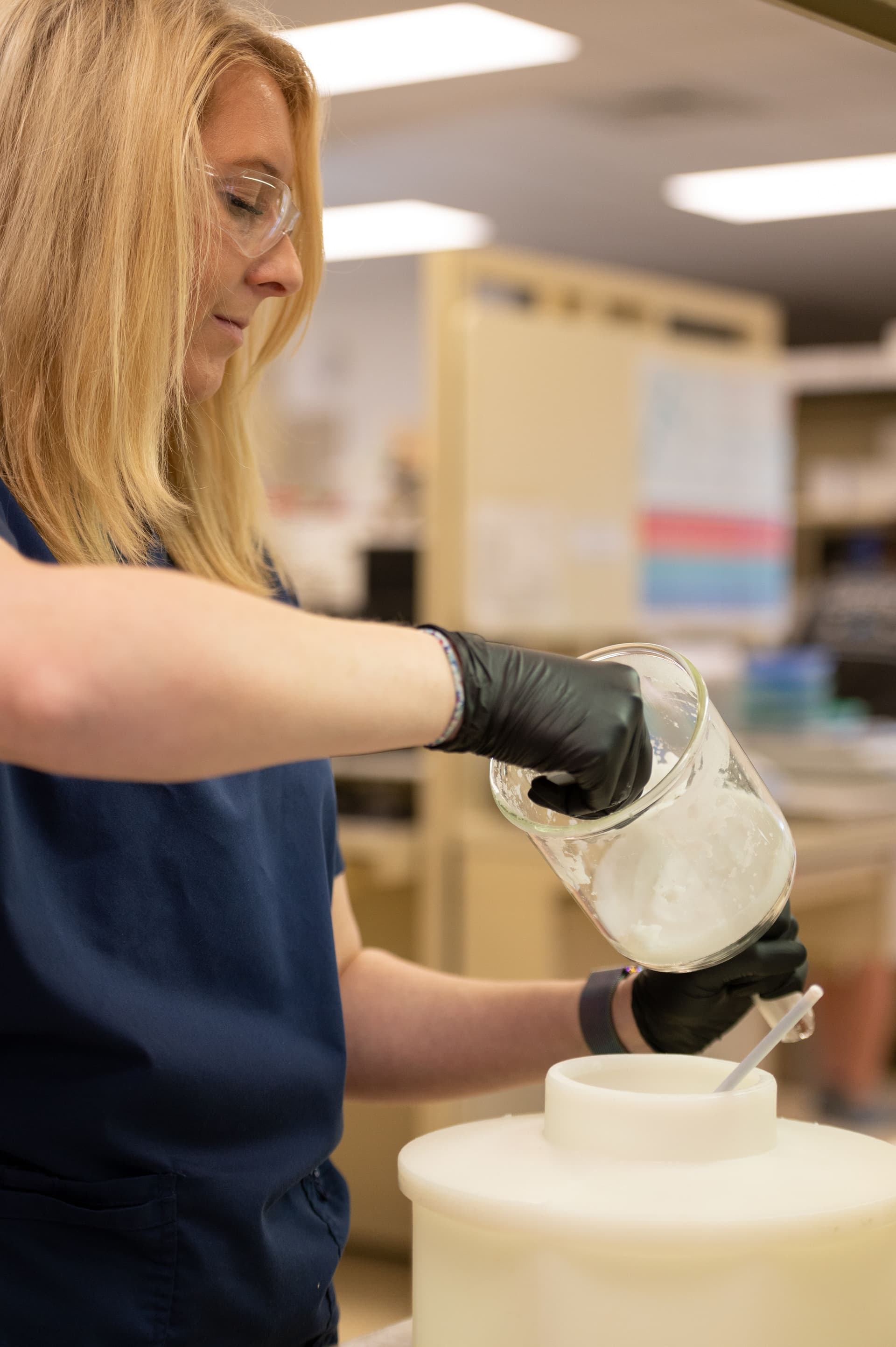
For proteins where low endotoxin matters, we build controls into the purification process instead of waiting until the end to find out if there's a problem. That means endotoxin-controlled water, buffers, reagents, and consumables at each step, with monitoring at key points along the way.
In-process monitoring can help identify rising endotoxin levels before the material reaches final formulation and filling. If levels start moving in the wrong direction, we want to catch that while there is still an opportunity to investigate and intervene.
Final testing still matters. Process controls help minimize the risk of endotoxin introduction throughout production; the final LAL assay verifies that the finished material meets its specified endotoxin limit.
Why it matters to you
If you're buying purified protein for a sensitive application, a clean gel only answers part of the question. Endotoxin doesn't show up there, but it can still show up in your results.
For applications where endotoxin matters, ask your supplier whether the material has been specifically tested for endotoxin, what limit or specification applies, and whether the lot-specific result is available on the Certificate of Analysis.
At Athens Bioscience, we produce low-endotoxin materials using controls designed to minimize endotoxin introduction during processing and test each lot against defined endotoxin specifications before release.